Where Futures Take Root: Collective Practices of Resistance, Solidarity and Future-Building
2025 – ongoing
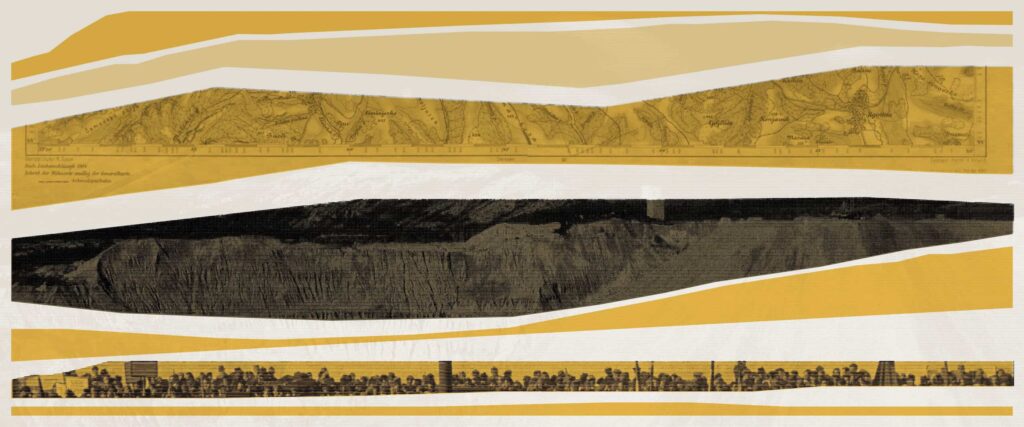
The long-term curatorial, artistic and research project of Kontekst Collective “Where Futures Take Root: Collective Practices of Resistance, Solidarity and Future-Building” addresses extractivism as a regime, economic, political and ideological – that shapes and destroys nature, the living world and social relations. The project brings together art collectives, artists, researchers and various local communities around shared struggles against the exploitation of natural resources, the transformation of landscapes into resources, the exhaustion and erosion of labor rights, and ever-deepening spatial and social injustices. Through research, workshops, working meetings and public programs, engaged artistic practice meets local knowledge and struggle. These encounters serve as spaces of exchange, learning and collective reflection – but also as a contribution to connecting struggles that are often isolated and left to confront these processes on their own.
Our research begins in Bor, and continues through Homolje, Leskovac, Stara planina and Rogozna, selecting locations where the consequences of unsustainable development are most visible, but where strong traces of resistance also persist – both historically and today.


Where Futures Take Root: The Case of Bor (2025-26)
We begin our research with The Case of Bor, indirectly continuing earlier reflections on certain aspects of the city’s development through the exhibition “A Lasting Art Class: Bor. Re-performing the Unknown” We renew our collaboration with the artist duo doplgenger, connecting collective knowledge, previous experiences and research, and producing new meanings through an experimental film language.
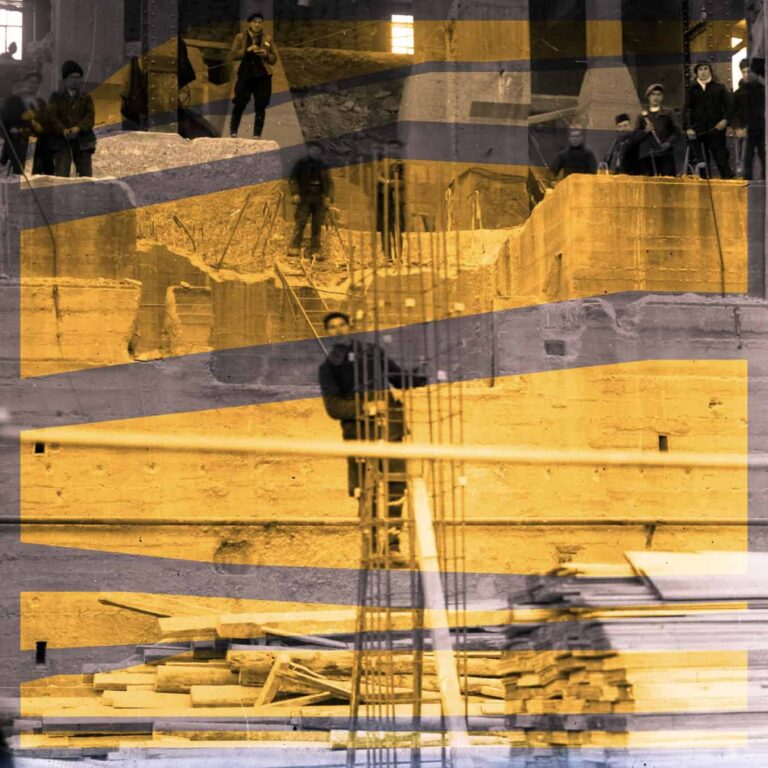
Through the paradigmatic example of the mining town of Bor and the neo-colonial relations that accompanied the development of mining in this region of Serbia, the theme of mining is connected to the processes of global extractivism in both historical and contemporary perspectives. The close connections between extractivism and war, as well as the growing militarization of society, intertwine through montage sequences with narratives of antifascist, anti-capitalist and anti-colonial struggle articulated through the language of art. At the center of the research are not only the scale of destruction, but also the persistence of resistance.
The inspiration and starting point for the research are the poems of Miklós Radnóti, the Hungarian poet who was imprisoned in the Bor mine, which was turned into a labor camp during World War II. His poems were later found in a mass grave in the Hungarian village of Abda. As a forced laborer and a Jew, he was mobilized for the third time by the Horthy regime and sent to the Bor mine in 1944 together with another fifteen hundred prisoners. The mine produced one quarter of the Third Reich’s wartime demand for copper.
The Bor mine, as a paradigm of capitalist social relations that ultimately produce the death of people and nature through extractivist processes, has long been a source of artistic inspiration. One of the earliest artistic accounts of the pollution of the fertile land surrounding the mine – as well as the struggles of peasants against the French mining administration, their pauperization and forced transformation into cheap labor within the same mine – was created by the revolutionary artist and activist Đorđe Andrejević Kun. His graphic novel “Bloody Gold” (1936) depicts the extremely inhumane conditions in which miners lived and worked, as well as their organizing and struggle against brutal (neo-colonial) exploitation.
Images of miners are also the subject of several film essays by the contemporary artist duo doplgenger, which, through examining the relationship between landscape and mining, as well as between political economy and historiography, articulate the role of engaged film as a medium within contemporary social struggles. In fragments of memory, in local struggles that persist despite fatigue and pressure, in feminist practices of care and antifascist traditions of organizing, cracks appear through which it becomes possible to imagine otherwise.
The project is supported by the Rosa Luxemburg Stiftung Southeast Europe.