Pertej/
Beyond
/
Over 20 Years
Pertej / Beyond / Over 20 Years
Partners in the project: CZKD and Kosovo Glocal, Vida Knežević and Marko Miletić (Kontekst Collective), as well as a wider network of collaborators, lecturers, mentors, and twenty participants from the region organized the production of art and knowledge during 2017 and 2018 through discursive programs, an exhibition, and accompanying publication in Serbian and English.
The project “Pertej/Beyond/Over 20 years” was launched with the idea of encouraging a new generation of artists and theoreticians from the region of the former Yugoslavia to jointly produce knowledge in contemporary art, criticism, and theory, which is the most dynamic field of new ideas and the possibilities of overcoming the given frameworks of the politics of division. In a time of immense migrations, with a growing number of young people leaving the region of former Yugoslavia for more developed countries in search of new perspective, we believe that it is of utmost importance to provide the generation facing ever fewer chances for its own public speech and artistic articulation to express its own views of contemporary and possible future life in the region, and knowledge about the historical resources for creating new horizons.
Motivated by an impressive continuity of collaboration and exchange in the region, within the field of contemporary art which does not have enough visibility and support for the inclusion of younger generations in the production, the project Pertej/Beyond/Preko 20 years gathered not only young participants but also experienced artists, historians, theorists, sociologists in a specific transfer of knowledge, an experimental educational program that will lead an intergenerational collaboration towards a production of new artworks and texts. The project then further developed the idea of participatory education, art production and critical thinking which has been developing for decades in the independent culture and media, and already has a noticeable impact on the emancipation of educational and cultural systems in Europe. The starting point of the research of the lesser-known continuities of collaboration, exchange and critique, was the Pertej exhibition, which took place in CZKD in 1997, but the research expanded to the temporal and geographic whole which today’s generations recognize as their pretext and context of their activities.


The exhibition “We Have Built Cities for You” is realized as the final result of the project „Pertej/Beyond/Over 20 Years”, produced in 2017-2018 by the Center for Cultural Decontamination in partnership with the organization Kosovo Glocal from Prishtina, in cooperation with the Kontekst collective.
Kontekst collective:
Within the framework of the exhibition “We Have Built Cities for You”, we return to the period of socialism and its contradictions, and through a number of researches we raise issues that are inter-related in a complex manner: from the economy, politics and workers’ self-management to leisure-time pursuits, the media, culture and art.
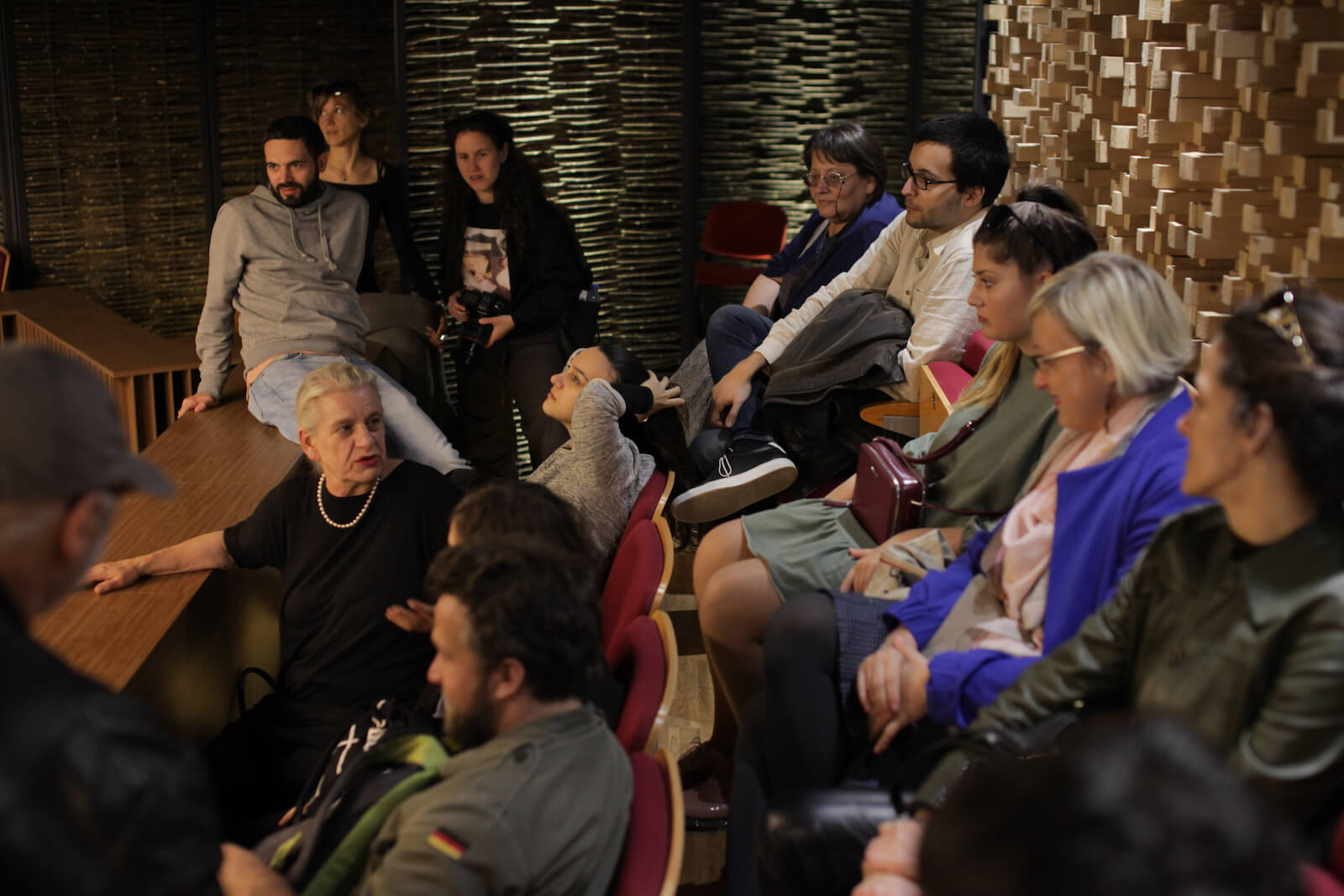
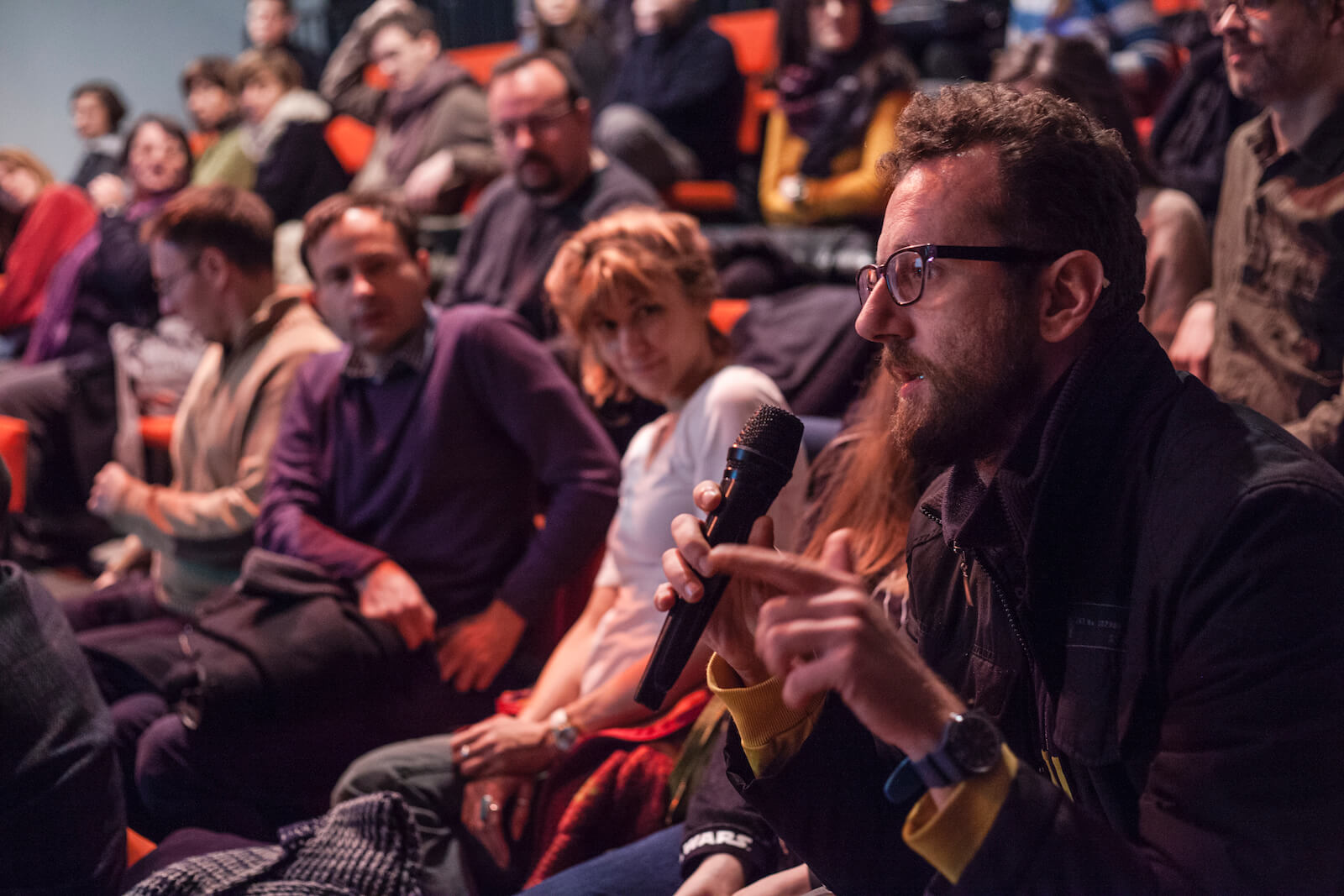
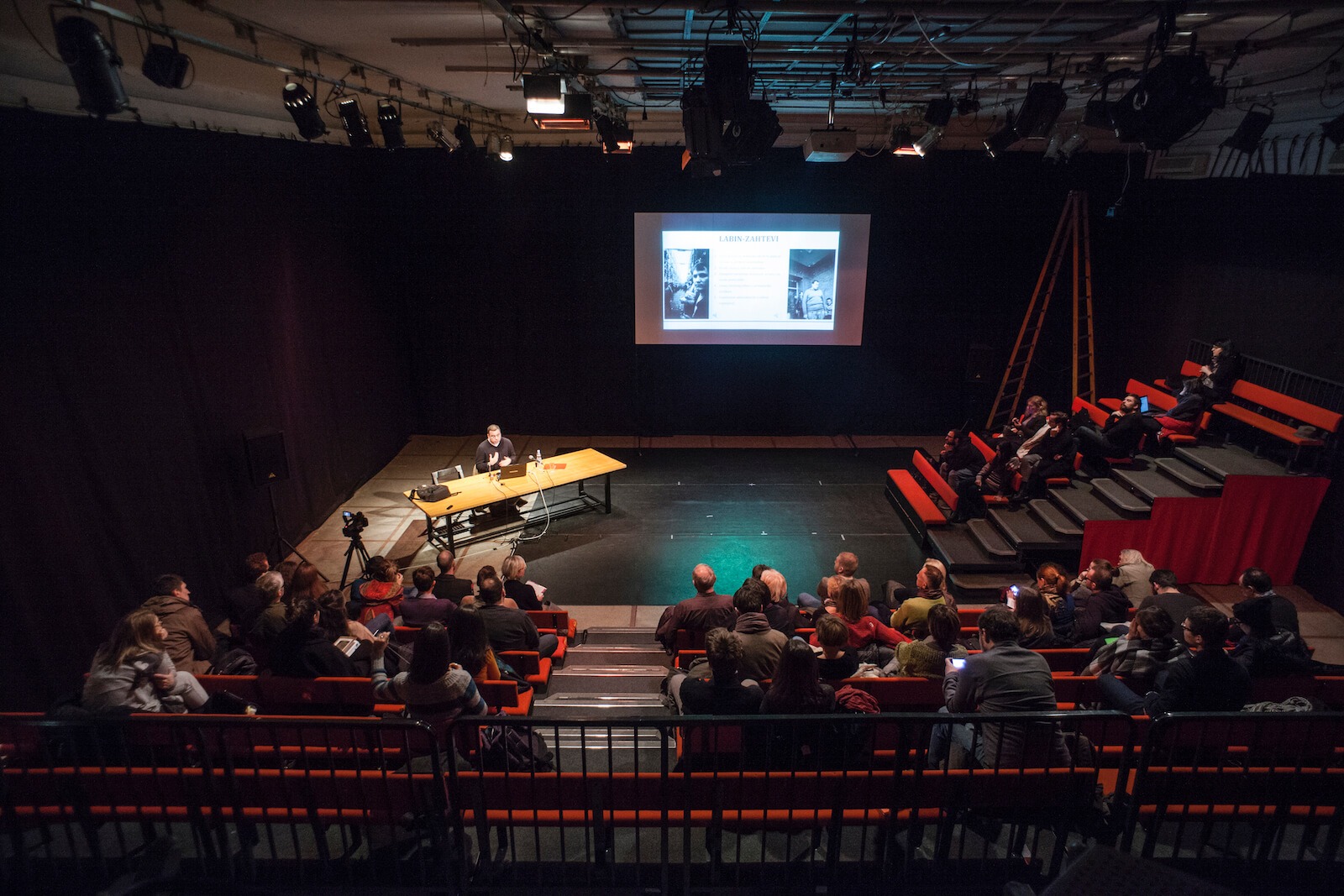
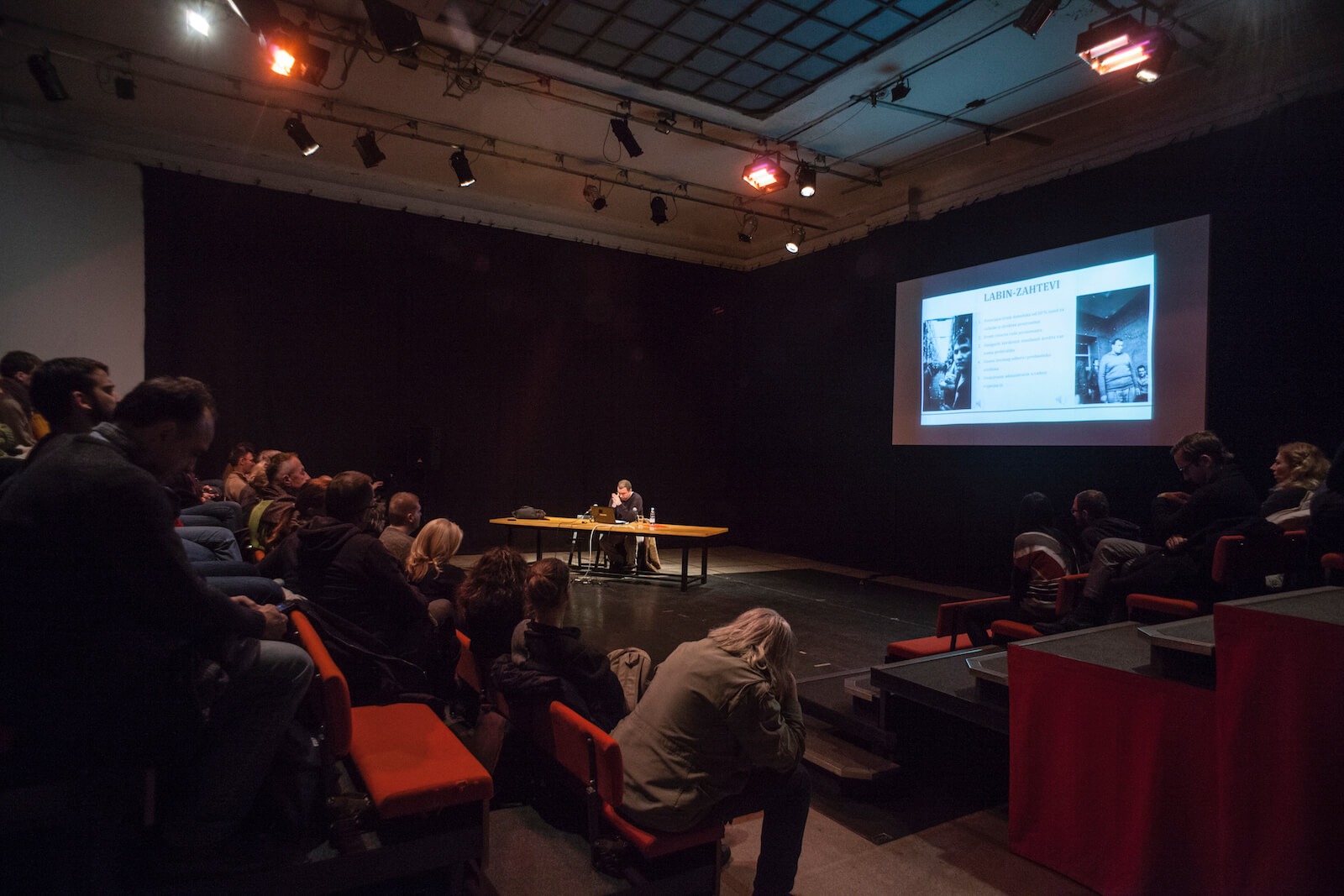
The development of the concept of the exhibition, the production of the exhibited works and research projects, as well as this publication and the final realisation of the entire project, mostly represent the collective work of a group that was formed during the first (research) phase of the project. The group is made up of artists and researchers who, in their work so far, have already dealt with the topics initiated by this project or who wished to initiate new research and activities related to the said issues. The thus formed group, together with curators and project organisers, participated in a number of discursive programmes (workshops, seminars, lectures, open-air programmes and presentations) that unfolded over a one year period, throughout which the basic topics of the project were further considered, joint views were formed and various possibilities of communicating them through the accompanying exhibition and publication were explored.
The overall complexity of a social system certainly cannot be presented within the framework of an exhibition and/or a publication, especially taking into consideration the production limitations of the project framework. Thus the results of this project represent merely a part of the possible topics and approaches that we can use for the purpose of understanding the contradictions of Yugoslav socialism. It is important to point out that, although individual investigations have their analytical basis in specific “case studies” related to various spheres of social activities, in the end they all converge in certain joint hypotheses that frame the entire project, the exhibition and the accompanying publication. They reflect the overall complexity of the approach to dealing with the problem of Yugoslavia, not fearing potentially opposed and conflictual positions, within a broad spectrum of contemporary research on the Left. In other words, this exhibition and publication constitute an invitation to a discussion about socialist Yugoslavia from the perspective of the left, including a discussion within the sphere of culture, which is still the hegemonic space of liberal ideology coupled with nationalist policies.
The project methodology is based on our years-long experience with similar work formats. It aims to include various actors interested in a particular research area and collective work. We believe that involving people with different experiences, knowledge, professional orientation and interests is of key importance for creating the possibility of a collective thinking of issues related to different (regional) cultural, economic and political relations.
We present the results of the work in two equally important representational formats: that of an exhibition and that of an accompanying publication, which are directly related, but are simultaneously conceived for independent reading.
The publication in front of you aims to provide a discursive framework for the eponymous exhibition, to deepen and critically analyse the issues that we raise throughout the project, to position a (new) theoretical framework and to offer new readings of the complex socio-political events dealt with. What should be clear to the readers is that, through this exhibition and the accompanying publication, we do not wish to and cannot make anything in the way of a rounded-off conclusion, but offer solely unfinished hypotheses, the initial assumptions for future investigations that will approach the topic of socialist Yugoslavia from a critical, materialist and class perspective.
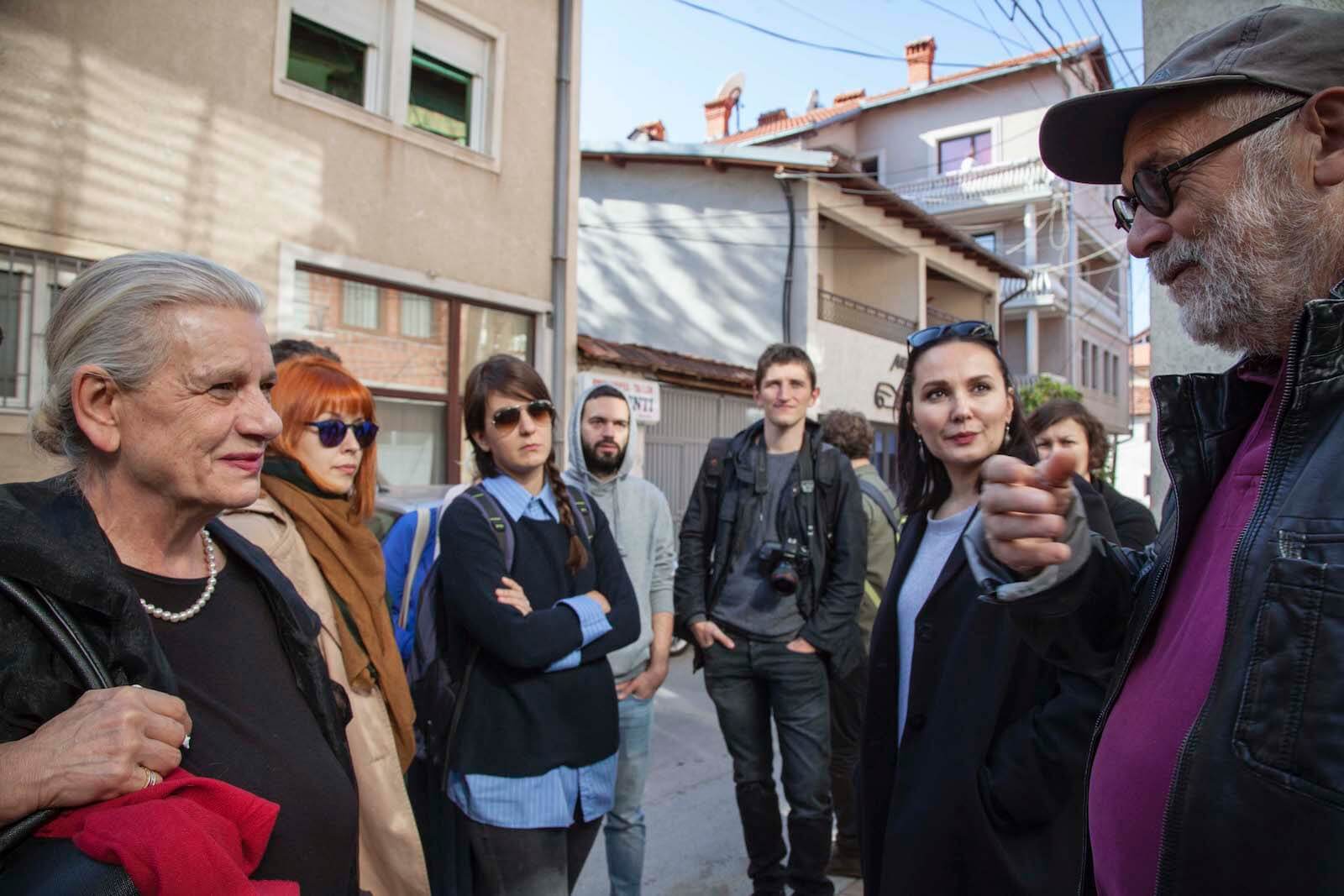
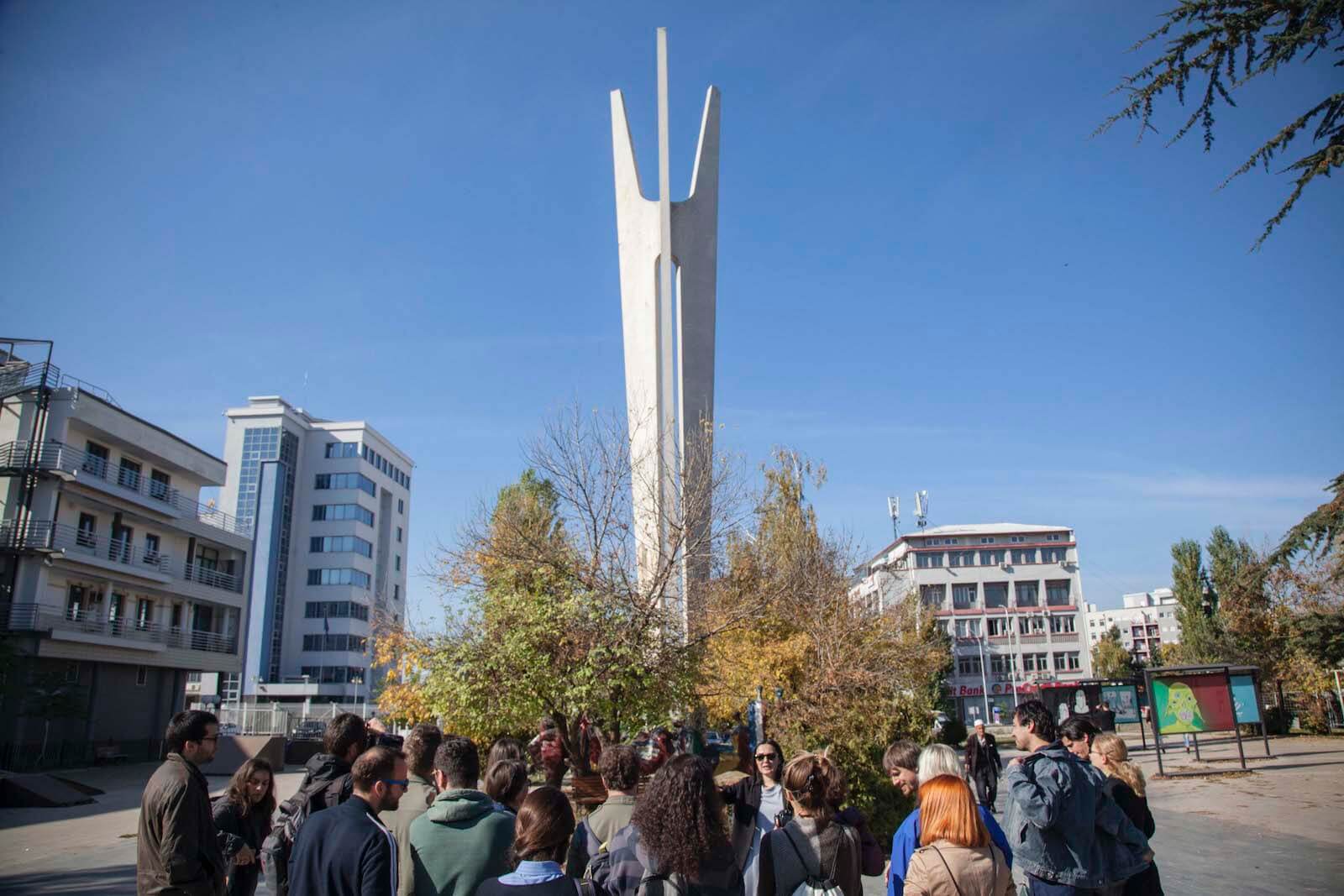
But there are also political intentions behind our work on this project. Even though Yugoslav socialism and its emancipatory achievements cannot be transposed to the present time merely by using the copy/paste function, we can still learn certain political lessons – at least one of them has to do with the necessity of struggle as an organised collective act aimed towards creating a new society of freedom, equality and solidarity.
The exhibition participants include: Bojan Mrđenović (Zagreb), Boris Postnikov (Zagreb), the Centre for Contemporary Art of Montenegro (Podgorica), Crvena (Sarajevo), Doplgenger (Belgrade), Filip Jovanovski and Ivana Vaseva (Skoplje), the group Borovo (Zagreb), Irena Pejić (Belgrade), Iskra Krstić (Belgrade), Kurs (Belgrade), Lidija K. Radojević and Ana Podvršič (Graz/Ljubljana), Majlinda Hoxha (Priština), Mario Reljanović (Belgrade), Milica Lupšor (Zrenjanin), the Cultural Centre Punkt (Nikšić), the Workers’ Video Club (Zrenjanin), Srđan Kovačević (Zagreb), Vigan Nimani (Priština).
Curators: Vida Knežević and Marko Miletić (Kontekst kolektiv)
Visual identity and exhibition architecture: Andreja Mirić
Exhibition design and research visualisation: Miloš Miletić and Mirjana Radovanović (KURS)
Production Centre for Cultural Decontamination.
Project manager: Aleksandra Sekulić
The project team: Borka Pavićević, Shkelzen Maliqi, Ana Ćosić, Slavica Vučetić, Ana Isaković, Ljubica Slavković, Majlinda Hoxha, Luna Đorđević, Besa Luci, Ivica Đorđević, Cristina Mari, Adam Ranđelović, Vanja Banković, Dragan Škorić, Dejan Pantić, Danica Stojanović
Project is supported by:
Delegation of the European Union – EU/IPA (Civil Society Facility).
The publication has been produced with the assistance of the European Union – IPA. The contents of this publication are the sole responsibility of Center for Cultural Decontamination and can in no way be taken to reflect the views of the European Union.
Ministry of Culture and Information of the Republic of Serbia.
The project is supported by the Embassy of Switzerland in the Republic of Serbia and in Montenegro. The opinions expressed here belong exclusively to the author and do not necessarily reflect the official opinions of the Swiss Embassy in the Republic of Serbia and in Montenegro.
Foundation for Open Society in Kosovo (KFOS).
Programs of the Center for Cultural Decontamination are supported by Foundation for Open Society in Serbia.